
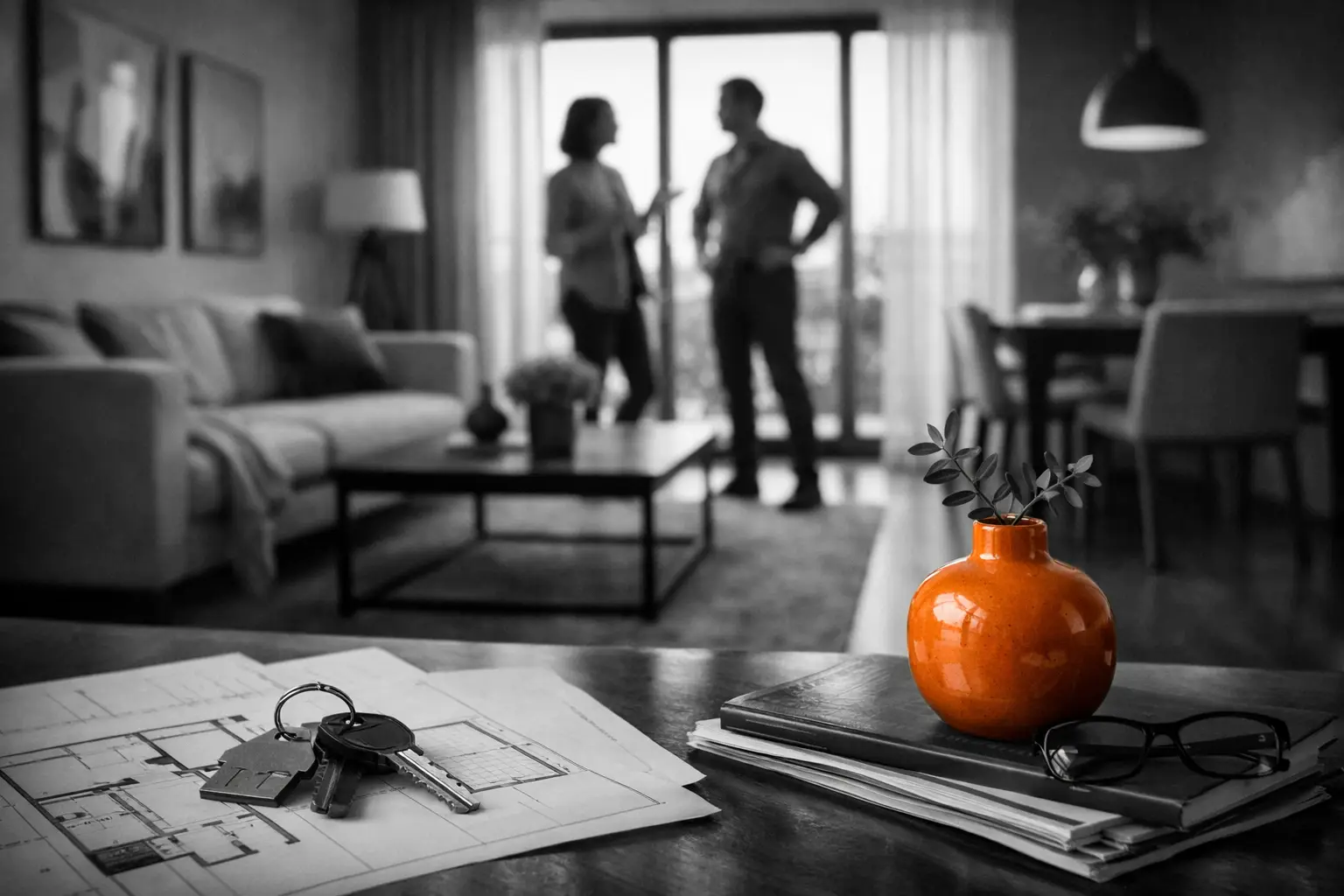
The first impression of an apartment is formed long before the first prospective buyer rings the doorbell. It begins the moment you set the price, choose the photos, and decide what stays and what goes. That is why the question of how to prepare an apartment for sale is not just about cleaning up before a viewing. It is about ensuring the entire sale process makes sense from the start and does not add unnecessary stress to an already demanding situation.
A recurring problem in standard residential sales is that owners focus on what is visible while neglecting the factors that actually determine the outcome. An apartment may be clean, pleasant, and well-photographed, but if the price is set incorrectly, documents are missing, or the home feels too personal, the sale will start to stall. That is exactly when avoidable chaos ensues.
How to treat preparing your apartment as a process, not an improvisation
Preparing an apartment has several layers: visual, technical, and commercial. Addressing only one of these often yields only half-hearted results.
Visual preparation is the most visible, but it is not enough on its own. Technical preparation means having accurate information about the apartment's condition, proper documentation, and clearly identified potential defects. Commercial preparation includes pricing strategy, market timing, and how viewings and communication with interested parties are managed.
This division is particularly important for those selling an apartment as part of a larger life change. When you are simultaneously navigating new housing, an inheritance, or a property settlement, there is no room for random decisions. A calm and managed approach usually brings better results.
Start with what truly affects the price
Many owners begin by buying decorations or painting the walls, only thinking about the asking price afterward. However, the price determines more than just how much you receive; it also influences the type of buyers you attract, how quickly they respond, and how strong your negotiation position will be.
Setting the right price is not simply a matter of averaging local listings. It is an estimate based on the specific condition of the apartment, its layout, floor, natural light, the building's technical state, legal status, and current competition. Two apartments in the same building can sell for different prices because buyers are not just purchasing square footage. They are buying an impression, certainty, and a comparison with alternatives.
An excessively high price is a more frequent mistake than one that is too low. While it may look safe initially, it often damages the first few weeks of the sale, which are usually the most critical. When a listing sits idle for too long, the market begins to question what is wrong. Subsequent price reductions then feel more like a repair than a strategy.
What to clarify about the price in advance
Before the apartment hits the market, it is beneficial to clarify at least three things. First, what is a realistic selling price? Second, how quickly do you need to sell? And third, is maximizing profit more important to you, or is the certainty and smoothness of the process a priority? These objectives can sometimes come into conflict.
The apartment should look tidy, not empty
Another part of the answer to how to prepare for sale relates to the space itself. The goal is not to create a catalog-style interior, but to allow someone else to imagine their own life there.
This usually means removing excess items, personal photos, small decorations, and anything that visually shrinks a room. This is not about being sterile; it is about clarity. When there is too much furniture or clutter, the buyer focuses on your life rather than the layout and light.
At the same time, it is not always right to empty the apartment completely. Empty rooms can look smaller and are harder to read. For a typical apartment, a modest, well-organized home often works better than a completely barren space. It depends on the property type, its size, and the target audience.
What to fix and what to leave alone
Common sense applies here. Minor repairs almost always make sense—dripping faucets, loose baseboards, a cracked light switch, or neglected bathroom grout unnecessarily worsen the impression. Buyers often infer the overall maintenance of the property from these small details.
Conversely, extensive renovations before selling are debatable. If you install a new kitchen according to your own taste, it may not lead to a higher sale price. Sometimes you simply invest time and money into something the new owner will change anyway. It is usually worth preparing the apartment well rather than remodeling it just before the sale.
Photos are not a formality, but a buyer quality filter
Photographs do not just determine how many people click on the ad; they influence who shows up for a viewing. When a presentation is inaccurate or chaotic, it attracts casual curiosity seekers. When it is clear, high-quality, and honest, it appeals to more relevant buyers.
Before the shoot, it makes sense to prepare the apartment more carefully than for a regular visit. Straighten textiles, hide toiletries, tidy the kitchen counter, remove drying racks, and open the space to light. The sequence of rooms and the logic of the presentation are also important; a buyer should understand how the apartment functions from the photos.
The description is equally important. It should not embellish, but accurately explain what the buyer gets. If the apartment has a weak point, it is better to address it openly and put it in context than to hope no one notices. Trust is built on accuracy, not superlatives.
Prepare documents before the first serious buyer contacts you
One of the most frequent complications arises when a concrete offer is on the table, and only then do you start searching for the paperwork. This loses momentum and sometimes undermines the buyer's trust.
Before launching the sale, it is wise to have at least essential documents and information ready. This includes the land registry extract (list vlastnictví), title deed, information on any liens, service charge statements, the energy performance certificate (PENB), documents from the housing association (SVJ) or cooperative, and an overview of completed repairs or renovations. Some apartments also involve co-ownership shares, easements, or inheritance issues.
This is not an administrative detail. Well-prepared documentation shortens the time between reservation and signing and reduces the potential for unnecessary complications.
A viewing is not a guided walking tour
When a prospective buyer enters your apartment, they are usually past the pure discovery phase. They are comparing. They have other offers in their head, they are calculating costs, thinking about financing, and looking for signals that everything is in order.
Therefore, it is good to prepare not only the apartment but also the flow of the viewing. The home should be quiet, comfortable in temperature, and free of distractions. Owners often make the mistake of wanting to explain everything during the tour, which creates pressure. Factual, concise, and well-managed communication that allows space for questions is much better.
For occupied apartments, it is also necessary to coordinate preparation with daily household life. This is precisely when it becomes clear whether the sale is managed or just improvised. If every viewing means a crisis cleanup and rescheduling the whole family's program, it will not be sustainable for long.
How to prepare the apartment when another step follows
The most stress does not come from a single sale, but from the transition. You are selling an apartment while simultaneously buying a larger one, or you are managing a sale after parents have passed and need to align multiple owners, or you are trying to move forward after a previous failed attempt.
In such moments, preparing the apartment is only one part of the plan. It is equally important to be clear about the schedule, decision-making powers, and who is handling what. Without this, even a well-prepared apartment can become part of an unnecessarily complicated process.
This is why it makes sense to think about the sale as a managed procedure, not a series of individual tasks. When you know what is happening now and what comes next, decisions are made more calmly. And calm is a surprisingly practical advantage when selling property.
In standard residential sales in Prague and its surroundings, it is repeatedly confirmed that the best result does not come from one big trick. It comes from a well-prepared whole—correct pricing, clear presentation, prepared documents, and a process that does not fall apart the moment the first serious buyer arrives.
A well-prepared apartment does not just look better in photos. Most importantly, it gives you, as the seller, greater control over a situation that would otherwise easily spiral into another burden.
All articles